Sunday, March 20, 2022

Tips to Save Money on Groceries


 YOU WILL BE AMAZED AT WHAT YOU CAN SAVE 

ON GROCERIES 


Scout your fridge and freezer for things that need to be used up.

  • When planning your meals for the week, include these things first. 
  • If you already have ground beef, choose a meal that would use it. 
  • If you have a surplus of eggs, make deviled eggs, etc. 


Only store a week’s worth of perishable food in your fridge to avoid wasting food that has spoiled. (If you prefer to shop every two weeks or monthly, adjust accordingly.)


Choose one day a week to plan your main meals for seven days ahead.

(You could choose any day of the week, but it’s nice to have the weekend planned out to avoid the rush at the grocery stores. Fridays are sometimes crowded days at the stores. Monday is often a restocking day, and that’s a mess.)


Keep it simple. Make a master list of meals that are family favorites and keep it handy for future reference.

    • Meatloaf, baked potato, and a vegetable.
    • Tacos and refried beans.
    • Pork chops, mashed potatoes, and a vegetable.
    • Elbow pasta and red sauce with chicken.
    • Chicken pot pie.
    • Chicken fettuccini and a vegetable
    • Quiche
    • Black bean tacos
    • Cottage cheese and fruit
    • Scrambled eggs and toast


2.  As you think through the ingredients of each of these meal plans, write down what you already have on the What I Already Have worksheet. If you do not have something you need, write it on the What I Need worksheet. (You can download both worksheets here.)


3. Consider what snacks you already have. Write them on the What I Already Have worksheet. Do not buy any more until those are gone or supply is getting low.

4. Consider what beverages you already have. Write them on the What I Already Have worksheet. Do not buy any more until those are gone or supply is getting low.

5. Decide what routine cleaning supplies you will use in the next week. Take careful inventory of what you already have. Do not buy a new cleaning product unless you plan to use it that week. Try to use up everything you have before you buy more. 

Use natural cleaning products when possible. On the Internet, you can find tips on how use them. 

    • White vinegar
    • Baking soda
    • Hydrogen Peroxide
    • Isopropyl alcohol
    • Liquid dishwashing soap
    • Microfiber towels to rewash and save on paper towels

Consider making these changes to save money.

1. Plan to serve meatless meals a couple of times a week.

Use the following foods to cook meatless meals that contain a healthy amount of protein. 


Eggs (1 egg has 6 grams of protein.)

Black beans (1 cup has 39 grams of protein.)

Cottage Cheese (1 cup of low-fat cottage cheese has 26 grams of protein.)

Cooked Quinoa (1 cup has 8 grams of protein.)


You can find all kinds of interesting recipes on the Internet using the foods above. For example:

    • Grilled cheese sandwiches.
    • Macaroni and cheese casserole.
    • Quiche
    • Frittata
    • Black beans and rice
    • Black bean chili


2. If serving meat, try making the portions smaller. Put less hamburger in soups and casseroles. Cut stew meat into smaller pieces and use fewer of them in a stew. It is not necessary to use a quarter pound of beef to make a hamburger taste good.


3.  Use a green salad as a side dish but try an apple cider vinegar and oil dressing instead of expensive bottled dressings.


4. Serve each person one-half of a large baked potato. It will usually be just the right portion.


My two biggest hints are (1) to take inventory and plan your meals before shopping and (2) to avoid shopping when you are hungry.


I fed a family of five on a teacher’s salary for many years, and these are just hints that worked for me. I still use them to cook for my husband and me. You can adjust accordingly. I hope you find something here that will help you.


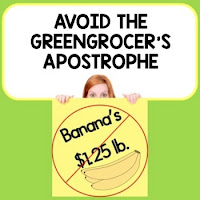
I have a resource in my store that will help students avoid a common error when using apostrophes. You might want to take a look here. 


Thanks for reading,
Charlene

You will find some interesting blog posts below from my friends in The Best of Teacher Entrepreneurs Marketing Cooperative. 


You are invited to the Inlinkz link party!

Click here to enter

Monday, February 21, 2022

Tips for Using Who's vs. Whose and Their vs .There, vs. They're


The words who's vs. whose and their vs. there vs. they're are frequently confused and used incorrectly.

Here are some simple tips to help you use these often-confused words correctly.

We'll begin by learning to choose between their vs. there vs. they're.
  • Their means it belongs to them. For example, I listen to their music.
  • There indicates a location. (Replace it with the similar word where to help you remember its meaning.) For example, I am going there after school.
  • They're is a contraction for the words they are. Read the contraction as two words. For example, They're (They are) my parents.
Here's a practice question. Choose between the words their, there, and they're to fill in the blanks.

1. When I got ________, he had ________ gift in his hands, and ________ going to be surprised.

*************************************************************************
Now let's discuss choosing between whose and who's.

  • Whose means it belongs to whom. For example, Whose coat is this?
  • Who's is a contraction for the words who is. Read the contraction as two words. For example, Who's (Who is) coming with me tonight?
Here are practice questions #2 and #3. Choose the correct word from the parentheses.

2. I don't know (who's, whose) to blame for this mess in the kitchen.
3.  (Who's, Whose) dirty dishes are on the counter?

You will find the answers at the end of this post.
*************************************************************************
To improve your writing, do a search for these words when you proofread something you have written to be sure you have chosen correctly.

To avoid making a mistake, ask yourself these questions:
  • Do you mean where? If so, choose there.
  • Do you mean it belongs to them? If so, choose their.
  • Do you mean they are? If so, choose they're.
  • Do you mean who is? If so, choose who's.
  • Do you mean it belongs to whom? If so, choose whose.
The following example sentences are correct:
  • Whose photos are posted there on the bulletin board?
  • They're the students who are going to take their time to do the assignment.
  • Who's the person who left the door open?
*********************************************************************
As promised, the answers to the practice questions above are #1 their, their, and they're  
#2 who's  
#3 whose

I hope you will find these tips helpful to use with your students and improve their writing. I have resources in my TpT store that will provide more helpful instruction and practice. The first one is FREE.


Thanks for reading,
Charlene

Here are some interesting and helpful blog posts from my friends in The Best of Teacher Entrepreneurs Marketing Cooperative. Take a look.


You are invited to the Inlinkz link party!

Click here to enter

Sunday, January 16, 2022

Create a Lesson Plan Your Students Will Love


How to Create A Lesson Plan Your Students Will Love


Here are 5 ways to create a lesson plan your students will love:
  1. Make them laugh.
  2. Promise they will make a good grade.
  3. Tie the lesson into modern culture.
  4. Let them talk to each other.
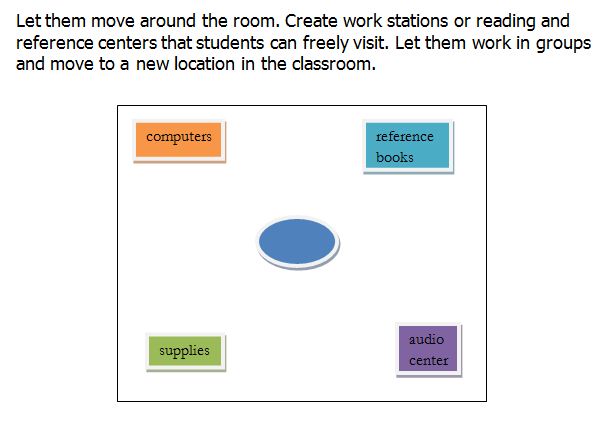
  5. Let them move around the room.

Little Bo Peep and Jack in the Beanstalk


Here's a chance for your students to do something they will really enjoy while practicing several valuable skills such as critical reading, critical writing, editing, proofreading, and cooperative learning. Students will work in groups to create newspapers based on nursery rhymes. They will have so much fun being creative and clever and it will not seem like work at all.


You can find it here 


I hope you have a Happy New Year in 2022.

Thanks for reading. Take a look at some of the interesting blog posts below from my teacher friends at The Best of Teacher Entrepreneurs Marketing Cooperative.

Best regards,
Charlene


You are invited to the Inlinkz link party!

Click here to enter

Sunday, December 19, 2021

Good Writers Vary Their Sentence Patterns


Writers sometimes make the mistake of repeating simple patterns in their sentences. A simple pattern would begin with the subject and the verb. Although such sentences are correct, using only one sentence pattern can become boring to the reader.

For example, Jane went to the zoo for her birthday. Two large, scary snakes lay in the window of the reptile house.

Good writers vary their sentence patterns by sometimes placing phrases or clauses at the beginning of their sentences to achieve variety. A longer introductory phrase or introductory clause should be followed by a comma.

For example, For her birthday, Jane went to the zoo. In the window of the reptile house, lay two large, scary snakes.

The twenty Christmas-themed sentences in the exercise shown above all begin with the subject and the verb. Learning to rewrite the sentences without changing their meaning is good practice for students to achieve sentence variety. At the same time, they will be reminded of things that are associated with the Christmas season.

You can use the resource three ways. Print it, use in Google Drive™, or use with Easel™ by TpT.

Click here to get your copy of this fun activity in my store.


Click here for a FREE holiday resource your students will enjoy.


Happy Holidays to you and your family. I hope you are safe and surrounded by those you love.

Thanks for reading. You may want to read some of the interesting blog posts from my teacher friends in The Best of Teacher Entrepreneurs Marketing Cooperative.

Best regards,
Charlene


You are invited to the Inlinkz link party!

Click here to enter

Sunday, November 21, 2021

Tips to Strengthen Your Sentences


Here are three tips to help your students strengthen their sentences and improve their writing.


1.  Use strong verbs and nouns instead of trying to prop up weak ones with adjectives and adverbs.

Weak: The dentist intentionally spoke untruthfully about the diagnosis.

Strong: The dentist lied about the diagnosis.

Weak: The insurance agency maliciously took advantage of persons with limited income and limited knowledge.

Strong: The insurance agency deceived the poor and the ignorant.


2.  If you do use adjectives and adverbs choose strong ones and avoid adding intensifiers.

violent  —  not rather violent

starved  —   not somewhat starved


histrionic  —  not slightly histrionic


3.  In contrast, do not try to prop up weak adjectives and adverbs with a string of intensifiers.


She was very, very, very mad. Instead say: She was infuriated. 

The pain was really, really bad. Instead say: The pain was excruciating. 


Here's a lesson with even more hints that will help your students improve their writing. It's ready to print and distribute to your students or you can assign it in Google Classroom.™ 

Answers are included.  https://bit.ly/3oRWhG8


Be sure to check my store for Christmas and holiday activities both free and priced. My latest is Four Fun Holiday Activities that you can print or assign in Easel.™ 

https://bit.ly/3nBVHgf


I hope your Thanksgiving holiday is peaceful and joyful.


Thanks for reading. Take a look at some of the interesting blog posts below from my teacher friends at The Best of Teacher Entrepreneurs Marketing Cooperative.

Best regards,
Charlene

You are invited to the Inlinkz link party!

Click here to enter