Showing posts with label colorful writing. Show all posts

Sunday, February 19, 2023

Choosing the Point of View in Fiction

CHOOSING THE POINT OF VIEW IN FICTION MAKES ALL THE DIFFERENCE


When your students first learn to write fiction, it’s important they think through the goals they have set for their story plan. One of the first decisions a writer must make when planning a new story is to choose from which point of view the story will be told. The point of view is the vantage point from which the reader views a story.


Although classic fiction and experimental fiction are often written in other points of view, such as the second-person, third-person objective, and third-person omniscient, your students will be more successful if they limit their choices to first person and third-person limited when first learning to write fiction. 


Most writers of modern fiction choose to write in first-person POV or third-person limited POV, so we will discuss these two. (Limited means entering the thoughts of only one character per scene, chapter, or novel.) Sometimes, we see the story through the eyes and thoughts of only one main character, but it is possible to include the points of view of several different characters.


•  First person POV uses the pronouns (I, me, my, mine, we, us, our, ours)
       *We can only read the thoughts of the first-person narrator. If the story is written in first person, a character cannot describe himself/herself. Sometimes writers use the “looking in the mirror” trick, or they will have another character describe the narrator. 


•  Third person POV uses the pronouns (he, him, his, himself, she, her, hers, herself, it, its, itself, they, them, their, theirs, and themselves)


Note the difference between these two examples of the same scene written in two different points of view.


Brief Incident for Scene 1
Mandy and Jane, roommates, are planning to paint the living room in the apartment they share. It was Mandy’s idea to paint the room, but it was Jane’s idea that the two of them could do it without any professional help. It’s Monday morning, and the two are ready to paint.

Scene 1
Viewpoint 1 – First Person, Mandy
   I examined the room and began to feel doubts. It was bigger than I thought, with lots of windows to paint around. “This looks like a pretty big job for just the two of us,” I told Jane.
   I was hoping she would agree, so we could hire a professional painter. But Jane is nothing like me. She has always been the do-it-yourself type.
   “Oh, this is easy,” Jane said as she picked up a clean paint roller. “Hand me that paint can. Let’s get this project started.”


Viewpoint 2 – First Person, Jane
   I saw Mandy sizing up the room, and I knew she was having doubts. She’s always been one to look for trouble and take the easy way out. Spending money on a painter is not in my budget. Somehow, I need to make her see that we can do this job by ourselves. Besides, we already bought all the paint and supplies.

   “It’s not too late to call a painter,” Mandy said. “Painting this room looks like a big job to me.”

   “Oh, this is easy,” I said and picked up a clean paint roller. “Hand me that paint can. Let’s get this project started.”


Viewpoint 3– Third Person, Mandy


   Mandy examined the room and began to feel doubtful. It was bigger than she thought, with lots of windows to paint around. “This looks like a pretty big job for just the two of us,” she told Jane. 
   She was hoping Jane would agree, so they could hire a professional painter. But Jane was nothing like her. Jane had always been the do-it-yourself type.
   “Oh, this is easy,” Jane said as she picked up a clean paint roller. “Hand me that paint can. Let’s get this project started.”


Viewpoint 4 – Third Person, Jane


   Jane saw Mandy sizing up the room and knew her roommate was having doubts. Mandy had always been one to look for trouble and take the easy way out. 
    Spending money on a painter is not in my budget, Jane thought. Somehow, she needed to make Mandy see that they could do this job by themselves. 
   “It’s not too late to call a painter,” Mandy said. “Painting this room looks like a big job to me.”
   “Oh, this is easy,” Jane said, ”and besides, we already bought all the paint and supplies.” She picked up a clean paint roller. “Hand me that paint can. Let’s get this project started.” 


After discussing the examples above, you can present your students with several other passages. Let them decide the point of view and from which character’s viewpoint it is told. You can write your own examples or take excerpts from the fiction they have read in class.


Here’s an example:


She stood at the door of the conference room as all eyes turned toward her and wondered if she was dressed appropriately for the occasion. Earlier that day, she had chosen a black jacket, a red pencil skirt, and her favorite heels to wear to the interview. As quickly as she could, she took the chair farthest from the man who was staring at her with a cold look in his eyes.


Name the Point of View. (First Person or Third-Person Limited) 


From which character’s POV is the scene written? 

Another exercise is to have students write scenes of their own and choose the POV and which character’s viewpoint they will use.

Here’s another example: 


Instructions: Write a brief scene of your own with two characters. (One wishes to get takeout for dinner. One wishes to cook at home.) Choose the point-of-view and the character from whose POV you will tell the story.


Knowing how to identify the point of view in the fiction that they read and write will enrich your students' experiences with literature.


If you would like to teach this concept with a no-prep resource that I used with my own students, you will find it here. It is available as a print, Google Drive™, or Easel™ activity.


If you would like to read more blog posts by my teacher friends at The Best of Teacher Entrepreneurs Marketing Cooperative, you will find their posts below.


Thanks for reading,

Charlene


You are invited to the Inlinkz link party!

Click here to enter

Sunday, November 20, 2022

Tis the Season

cup of hot chocolate with marshmallows


December is almost here. It was always the shortest month in the school year for me, so I felt it necessary to accomplish as much as possible in the two and a half or three weeks of instruction available while, at the same time, celebrating the spirit of the season with my students.


Since learning to achieve sentence variety is a skill that all good writers must master, we worked on varying sentence patterns. Because I wanted to celebrate the spirit of the Christmas season, the sentences I put in the sentence combining exercises all had Christmas and winter holiday themes.


Although there is nothing wrong with sentences that begin with the subject followed by the verb, the writing becomes monotonous if a writer repeats this pattern in sentence after sentence. Most grammar checker apps will flag this writing weakness. Since ELA teachers are the official "grammar checkers" for their students, they will be watching for this also.


The best way to achieve sentence variety, is to move phrases and clauses to the beginning of some of the sentences or locate them in different positions to avoid the repetitive subject-verb pattern.


Here’s what I mean.


Original subject-verb pattern:


All my gifts sat under the tree waiting for me to open them.  


Revised:


Under the tree, sat all my gifts waiting for me to open them. 


Here’s another example:


Original subject-verb pattern:


Many people send Christmas Cards to friends and relatives a few weeks before Christmas.


Revised:


A few weeks before Christmas, many people send Christmas Cards to friends and relatives.


Original subject-verb pattern.


My mother insisted that we write our thank-you notes before we could play with our toys.


Revised:


Before we could play with our toys, my mother insisted that we write our thank-you notes.


You can create an exercises like these for your students to practice varying sentence patterns. The more practice they have, the better their writing will become. Here’s a free one you can print or use in Easel.


Here’s a FREE resource for you to use.


A teacher with a pencil in her mouth.


I have seven more sentence patterns resources that are ready to use and include the answers. You can purchase them separately or buy them in a bundle and save 20% on the individual resources. One of them is Thanksgiving themed and another is for Christmas. I hope you will find them helpful. You will find the bundle here.


Sentence Pattern Worksheets Bundle by Charlene Tess


I hope you have a happy, healthy, and restful winter break. I will celebrate with my husband, daughters, and grandsons. We will eat entirely too much and play board games after dinner. I look forward to both.


Here are some interesting blog posts from my teacher friends at The Best of Teacher Entrepreneurs Marketing Cooperate. I hope you enjoy them.

The Best of Teacher Entrepreneurs Marketing Cooperative

You are invited to the Inlinkz link party!

Click here to enter

Sunday, October 16, 2022

Writing Activities for Fall and Halloween


Halloween and things associated with the fall season present an opportunity for students to complete some enjoyable writing activities. Here are some examples you might want to try.


1. Song Lyrics 


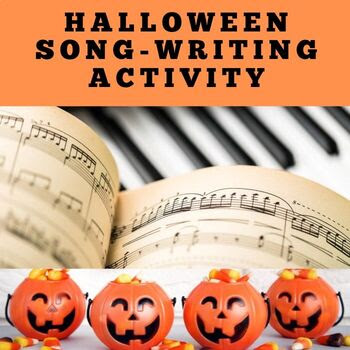
One of my students’ favorite activities was to convert the lyrics of familiar Christmas songs to fit the themes of Halloween. After they finished their songs, those who were outgoing sang their songs to the class. Other students preferred to read their lyrics to the class or give their song to another student who was happy to perform it. Everyone had fun as they laughed and sang along.


Here’s an example of a Halloween song set to the tune of “Jingle Bells:”


Dashing through the streets 

In a costume made for play, 

Over the curbs we go 

Laughing all the way. 


Ghosts and goblins shriek 

Making spirits rise 

What fun it is to trick or treat 

A neighbor’s house tonight. 


Oh, Halloween, Halloween, 

My favorite time of year. 

Oh, what fun it is to laugh and scream in fear.


Since kids are so creative, their songs were fun to write and even more fun to sing. You could do this with any familiar song. It would not have to be a Christmas song.


2. Sentence Combining Exercises


Here’s another idea. Your students might enjoy a Halloween Sentence Combining Activity. 


Students would combine a basic kernel of sentences into one sentence that is more interesting. 


Here’s an example:


Instructions: 

Read the kernel of basic sentences below. Combine each cluster into one well-written sentence. You may move the information into any order that you wish. Do not leave out any vital information presented in the original sentences. 


Basic Sentence Cluster:


 We carved a pumpkin. 

 The pumpkin was orange. 

 The eyes and mouth of the pumpkin were triangles. 

 We made a jack-o-lantern.


Combined:

We carved triangular eyes and a mouth on an orange pumpkin and created a jack-o-lantern.

or

We carved a jack-o-lantern with triangular eyes and a mouth from an orange pumpkin. 


3. Take Photos with One's Mind


The fall season is a perfect time for students to create photographs with words instead of a camera. The assignment I gave them was to walk around in a scenic area or attend a fall festival or visit a department store that was decorated for the season and take snapshots of what they see. Then their assignment was to write a descriptive paragraph or two and describe the scene using vivid words.


If students do not have a camera or a phone, they can take notes as they walk around and then write a descriptive paragraph or two to describe the scene using vivid words.


If possible, display the photos and let the class compare them to the descriptions as the students read their assignments aloud.


Here are two photos you may want to use.


If you would like a no-prep lesson with examples and suggested songs, you will find it in my TpT store here.


If you would like a no-prep lesson with sentence-combining activities, you will find it in my store here.


I hope these will give you some great ideas for the fall season. They worked well in my classroom, and my students enjoyed them.


Here are some blog posts from my friends who are members of the Best of Teacher Entrepreneurs Marketing Cooperative. Their posts always have great tips and ideas.


Thanks for reading,

Charlene


You are invited to the Inlinkz link party!

Click here to enter

Sunday, April 24, 2022

Make an Old Story New Again


Some say there are only three types of plots:

The happy ending, the unhappy ending, and the classical Greek tragic ending in which events are controlled by fate.

There are many variations on these three plots, of course, and plots are always controlled by the conflict between the characters. 

Remember the conflicts taught in high school literature classes?
  • character vs character
  • character vs nature
  • character vs the environment
  • character vs machine
  • character vs the supernatural
  • character vs self
  • character vs religion

The point? It is not necessary to reinvent the wheel. Coming up with a new plot that has never been written is improbable. So, take a cue from many modern writers and rework a plot from a story you've read or a movie you've seen.


There are many examples of revised plots. For example, Romeo and Juliet was adapted as the musical, West Side Story, and the typical spaghetti western novel was transformed into Star Wars. The same classic plots, but oh so different in every other way.

So, if you have trouble coming up with an idea, just work with a classic plot and start changing all the other elements to make it your own story.
  • Change the setting.
  • Change the point-of-view. Tell the story through the mind of a different character than in the original story. 
  • Choose a classic plot and bring it into the modern age. Choose a fairy tale, an epic poem, a classic novel, a Bible story, or a myth. 
  • Keep the conflict from a novel or play or movie and change everything else. (Change characters, point-of-view, plot, setting, etc.)
  • Change the protagonist from male to female or child to adult.
In my creative writing classes, I had my students watch both True Grit and Shane. Then they had to outline two original stories using the same plots as the movies but the settings would be in the present day. They had to invent their own characters and settings, but the basic plot and the themes were to remain the same as in the movies they saw. My students wrote some great stories and told me they loved doing the assignment.

Remember, if you base your writing on a plot and then make it your own by using your own words, you will not be plagiarizing. An idea cannot be copyrighted.

So, don't take too much time reinventing the wheel. Just think of books and movies that you really enjoyed. If you liked the plot or the theme, use it, but change all the other elements.

You will find many creative writing ideas and resources in my TpT store. Take a look. You will save 20% if you purchase the resources in a bundle. 

Thanks for reading,
Charlene

Before you go, take a look below at some of the helpful blog posts from my teacher friends from The Best of Teacher Entrepreneurs Marketing Cooperative. 


You are invited to the Inlinkz link party!

Click here to enter

Sunday, October 20, 2019

Fall Into Figurative Language


"Winter is an etching, spring a watercolor, summer an oil painting and autumn a mosaic of them all. "
—Stanley Horowitz

My students enjoyed learning to recognize and write examples of figurative language. Yours will, too.

Although there are many different types of literary devices, the five that follow are used most frequently and are the most common: Simile, Metaphor, Alliteration, Personification, and Hyperbole. 

Alliteration - The repetition of consonants. There should be at least two repetitions in a row.  For example, Sally sells seashells down by the seashore.

Hyperbole - A figure of speech that uses deliberate exaggeration. For example, I’m so hungry I could eat a cow. 

Metaphor - A direct comparison between two things that are different but suggest some similarities. For example, The girl’s eyes were jewels glowing in the darkness.

Personification- A figure of speech that gives human qualities to animals or objects. For example, The daffodils nodded in the rain. 

Simile  - A comparison between unlike things using like, as, or as though. For example, The compliment was as sweet as sugar.  

Learning to recognize these 5 literary devices and to write original examples of them will give your students a richer understanding of literature, and their writing skills will achieve a new level of sophistication.

My 6-page exercise has 20 multiple choice questions and opportunities for students to write the five literary devices. The answers are provided for your convenience. 

I hope you have a colorful autumn filled with vivid images and joyful events.

Thanks for reading,


Visit some of the interesting blogs below:


You are invited to the Inlinkz link party!
Click here to enter