Showing posts with label revising sentences. Show all posts

Sunday, March 16, 2025

Empowering Young Writers: The Art of Self-Editing


Spring Cleaning Your Writing

Teaching students to revise and edit their own work is a cornerstone of effective writing instruction. By developing these skills, students become more independent learners, critical thinkers, and confident communicators. But how can we help our students become their own best editors?


Why Self-Editing Matters

  • Students who can self-edit are less reliant on teachers for feedback, allowing them to take ownership of their writing.
  • The process of revising and editing demands critical thinking from students as they analyze their work, make informed choices and enhance their writing.
  • As students see their writing improve through self-editing, their confidence in their abilities grows.

Strategies for Effective Self-Editing

  • Break down the process into manageable steps: brainstorming ideas, drafting, revising, editing, and publishing.
  • Model the process for students, thinking aloud as you revise and edit a writing sample
  • Use anchor charts or checklists to guide students through the process.
  • Focus on one or two areas at a time, such as capitalization or punctuation.
  • As students become proficient, introduce new editing skills.


Create a Positive Writing Environment:

  • Foster a classroom culture where mistakes are opportunities for growth.
  • Celebrate the writing process, not just the final product.


Encourage Peer Editing:

  • Pair students for peer editing sessions.
  • Provide a structured format for giving and receiving feedback.
  • Teach students how to offer constructive criticism.
  • Use online tools and resources to support self-editing.
  • Explore grammar and spelling checkers, but emphasize the importance of human judgment.


Tips for Student Success

  • Set Realistic Goals: Start with small, achievable goals and gradually increase expectations.
  • Provide Ample Time: Allow students sufficient time for both drafting and revising.
  • Offer Specific Feedback: When providing feedback, focus on specific areas for improvement.
  • Use a Variety of Texts: Expose students to different genres and writing styles to expand their editing skills.

By implementing these strategies, you can help your students develop the essential skills of self-editing and become confident, independent writers. Remember, the journey to becoming a skilled writer is a process, and with patience and practice, your students will achieve remarkable results.


Here's a free resource that will help students practice removing redundant words to improve their writing.


Since I am a fiction writer, I spend many hours each day revising and editing my manuscripts. I have created resources for secondary students that will help them polish and improve their writing, too. The best way to purchase these activities is in a money-saving bundle, but they can also be purchased individually.


Thanks for reading. Check out the Linky Party below to find blog posts from my teacher friends at The Best of Teacher Entrepreneurs Marketing Cooperative. If you would like to join this group, click here.


You are invited to the Inlinkz link party!

Click here to enter

Sunday, October 16, 2022

Writing Activities for Fall and Halloween


Halloween and things associated with the fall season present an opportunity for students to complete some enjoyable writing activities. Here are some examples you might want to try.


1. Song Lyrics 


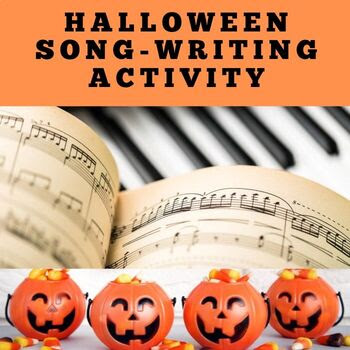
One of my students’ favorite activities was to convert the lyrics of familiar Christmas songs to fit the themes of Halloween. After they finished their songs, those who were outgoing sang their songs to the class. Other students preferred to read their lyrics to the class or give their song to another student who was happy to perform it. Everyone had fun as they laughed and sang along.


Here’s an example of a Halloween song set to the tune of “Jingle Bells:”


Dashing through the streets 

In a costume made for play, 

Over the curbs we go 

Laughing all the way. 


Ghosts and goblins shriek 

Making spirits rise 

What fun it is to trick or treat 

A neighbor’s house tonight. 


Oh, Halloween, Halloween, 

My favorite time of year. 

Oh, what fun it is to laugh and scream in fear.


Since kids are so creative, their songs were fun to write and even more fun to sing. You could do this with any familiar song. It would not have to be a Christmas song.


2. Sentence Combining Exercises


Here’s another idea. Your students might enjoy a Halloween Sentence Combining Activity. 


Students would combine a basic kernel of sentences into one sentence that is more interesting. 


Here’s an example:


Instructions: 

Read the kernel of basic sentences below. Combine each cluster into one well-written sentence. You may move the information into any order that you wish. Do not leave out any vital information presented in the original sentences. 


Basic Sentence Cluster:


 We carved a pumpkin. 

 The pumpkin was orange. 

 The eyes and mouth of the pumpkin were triangles. 

 We made a jack-o-lantern.


Combined:

We carved triangular eyes and a mouth on an orange pumpkin and created a jack-o-lantern.

or

We carved a jack-o-lantern with triangular eyes and a mouth from an orange pumpkin. 


3. Take Photos with One's Mind


The fall season is a perfect time for students to create photographs with words instead of a camera. The assignment I gave them was to walk around in a scenic area or attend a fall festival or visit a department store that was decorated for the season and take snapshots of what they see. Then their assignment was to write a descriptive paragraph or two and describe the scene using vivid words.


If students do not have a camera or a phone, they can take notes as they walk around and then write a descriptive paragraph or two to describe the scene using vivid words.


If possible, display the photos and let the class compare them to the descriptions as the students read their assignments aloud.


Here are two photos you may want to use.


If you would like a no-prep lesson with examples and suggested songs, you will find it in my TpT store here.


If you would like a no-prep lesson with sentence-combining activities, you will find it in my store here.


I hope these will give you some great ideas for the fall season. They worked well in my classroom, and my students enjoyed them.


Here are some blog posts from my friends who are members of the Best of Teacher Entrepreneurs Marketing Cooperative. Their posts always have great tips and ideas.


Thanks for reading,

Charlene


You are invited to the Inlinkz link party!

Click here to enter

Sunday, August 21, 2022

Warm Up Your Students' Writing Skills


Here comes back to school, ready or not! 

It’s that time of year when only we teachers understand feeling sad to see the end of summer, but at the same time, feeling excited to meet a new group of students who will quickly become an important part of our lives.
 
ELA students usually need a warm-up to sharpen their writing skills Here are some thoughts for an ELA lesson you might find helpful. This is how I presented it to my students.
 
~ ~ ~
 
Sentence combining is a writing process that can enrich your writing and help you make good stylistic choices. The best way to learn to write is to write and write and … well, you get it.
 
This technique challenges you to look at a group of basic sentences and then determine how they could best be combined into one or more interesting sentences that will have more style and make more interesting reading.
 
Moving words, phrases, and clauses into different positions and combining them can transform a sentence.
 
For example:
The athlete is talented.
The athlete is learning skills.
The skills are new.
The skills are difficult.
 
One way to combine these basic sentences might be:
 
The talented athlete is learning new and difficult skills.
 
Here’s another set of basic sentences to combine:
There was a car.
The car was red.
The car had a luxurious interior.
The interior was black.
The interior was leather.
 
You could combine these basic sentences like this:
 
The red car had a luxurious black leather interior.
or 
A luxurious black leather interior was in the red car.
 
Which one is better? That is a matter of opinion. Yours.
 
Here’s one cluster of sentences to combine. You try it. 
Combine these five basic sentences into one sentence with style.
 
He thought about his dorm room.
It was narrow.
It had a low ceiling,
It smelled like pizza.
The smell was stale.
 
(At this point, I would give my students an exercise to practice combining sentences.)
 
~ ~ ~

If you would like to offer your students more practice with sentence combining, I have four exercises ready to go. You can buy them individually, but the bundle will save you 20% off the individual resources These exercises require no preparation. Everything is ready to print and go. Some of the resources can be used in three ways. Print, use in Google™ Drive, or in Easel™ by TpT.


I hope you have a great school year. You will find a FREE Back-to-School eBook with resources from members of The Best of Teachers Marketing Cooperative (TBOTEMC) here. If you are not a member and would like to join this marketing cooperative, visit this link. 

Thanks for reading,
Charlene

Here are some great blog posts from my teacher friends on TBOTEMC.
Enjoy!

You are invited to the Inlinkz link party!

Click here to enter

Sunday, January 17, 2021

How to Reduce Wordy Sentences

Email, text messaging, Twitter, Facebook, Zoom, and other forms of internet communities are the way people interact with each other.

Am I against using these new ways to communicate? Absolutely not. I use them, too, and find it quite enjoyable to interact with friends both old and new.

Am I tempted to shorten my messages and tweets with letters and numerals such as, "I want 2 C U 2 day?" Not really.

Because I am a writer and a grammar teacher, I try to condense my words into succinct phrases, clauses, and sentences that convey my exact meaning while using fewer words.

With practice, anyone can become a better writer. One of the best ways to improve one’s writing is to cut extraneous words from essays, emails, texts, or manuscripts.

It takes work to say what you mean, but anyone can do it well with practice.

Learn to:
  • repeat a word or phrase only when necessary.
  • avoid a careless or needless repetition of a thought in different words.
  • avoid clumsy, roundabout expressions.
  • eliminate needless words and choppy sentences.
  • avoid the double negative.
  • use adverbs sparingly.
  • choose the precise word to convey your meaning.
  • avoid clichés.

*********************************************************

It is quality, not quantity that counts in writing. Most good writing is not cluttered with superfluous words.

Here are three ways to improve your writing:

(1) Eliminate extra words and the unnecessary repetition of ideas. 


For example:

Wordy: The dog played with a small, little, round ball, which was made of rubber.

Better: The dog played with a little rubber ball.


(2) Reduce clauses to phrases and phrases to single words.


For example:

Wordy:  We decided that we would leave the meeting early.

Better: We decided to leave the meeting early.

Wordy: The illegal immigrants who had been captured were deported to Mexico.

Better: The captured illegal immigrants were deported to Mexico.


(3) Avoid trying to sound like Shakespeare. Write naturally. 


For example:

Wordy:  Illumination is required when the sun has sunk into the west and left the premises in darkness.

Better: Turn on the lights at dark.


What about you? Do you sometimes use more words that you really need? I know I do, so when I go back and proofread what I have written, I often find myself tapping the delete key.


********************************************************
Twitter is a great place for people to learn to practice reducing long, convoluted, rambling sentences into 280 characters.

Click here to download a FREE exercise to practice reducing longer sentences into shorter, concise statements.


Here are some related resources in my store that you might find useful for your students.


“It ain't whatcha write, it's the way atcha write it.”

                                                ------- Jack Kerouac


Thanks for reading,


Here are some interesting blog posts from my teacher friends in The Best of Teacher Entrepreneurs Marketing Cooperative. Enjoy!


You are invited to the Inlinkz link party!

Click here to enter